ESD Resin
A static-dissipative SLA resin with modulus and impact strength similar to ABS. ESD Resin prints ESD-safe tooling and enclosures that protect sensitive electronics, repel dust and powder, and raise yield on electronics manufacturing lines.
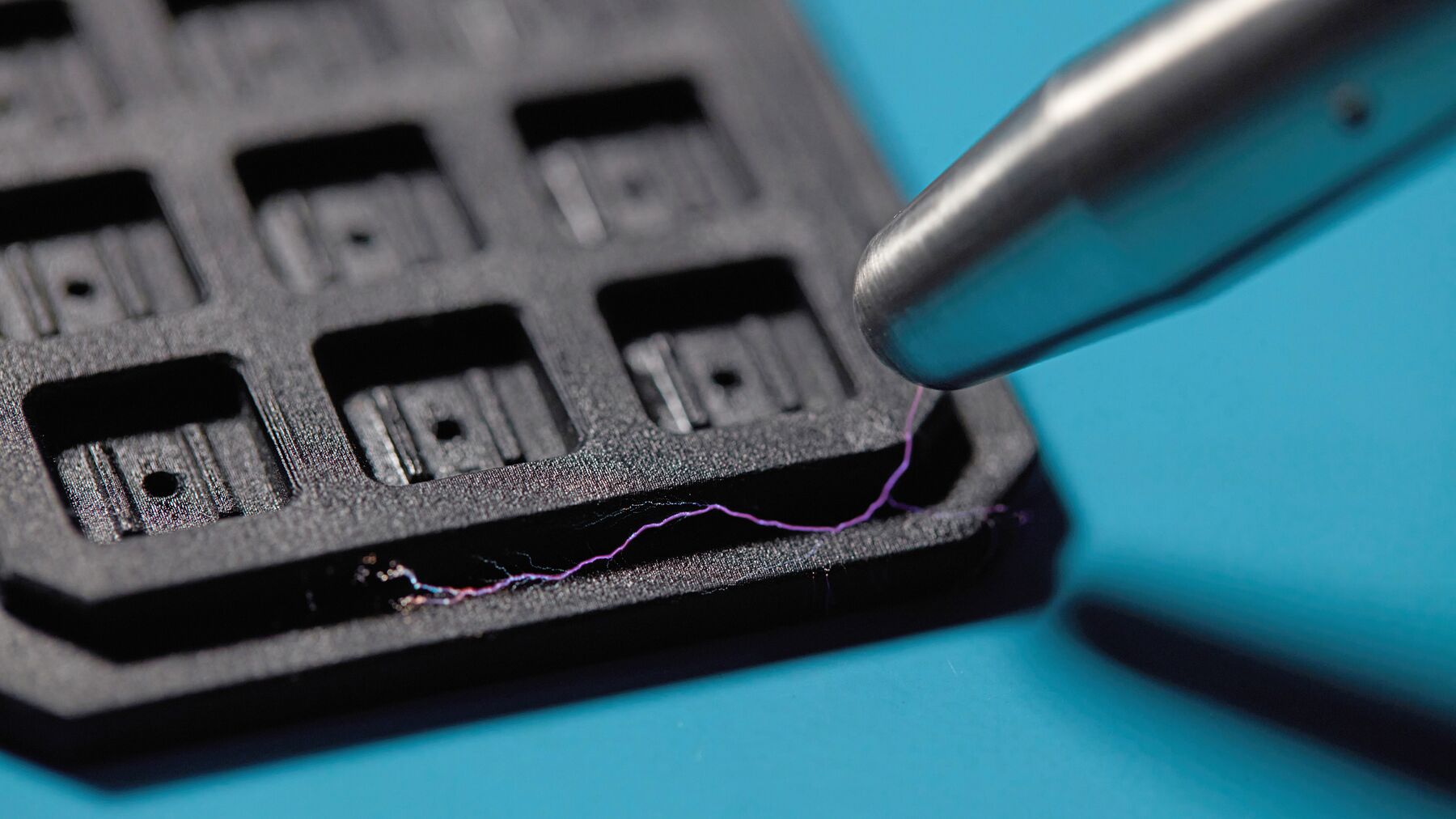
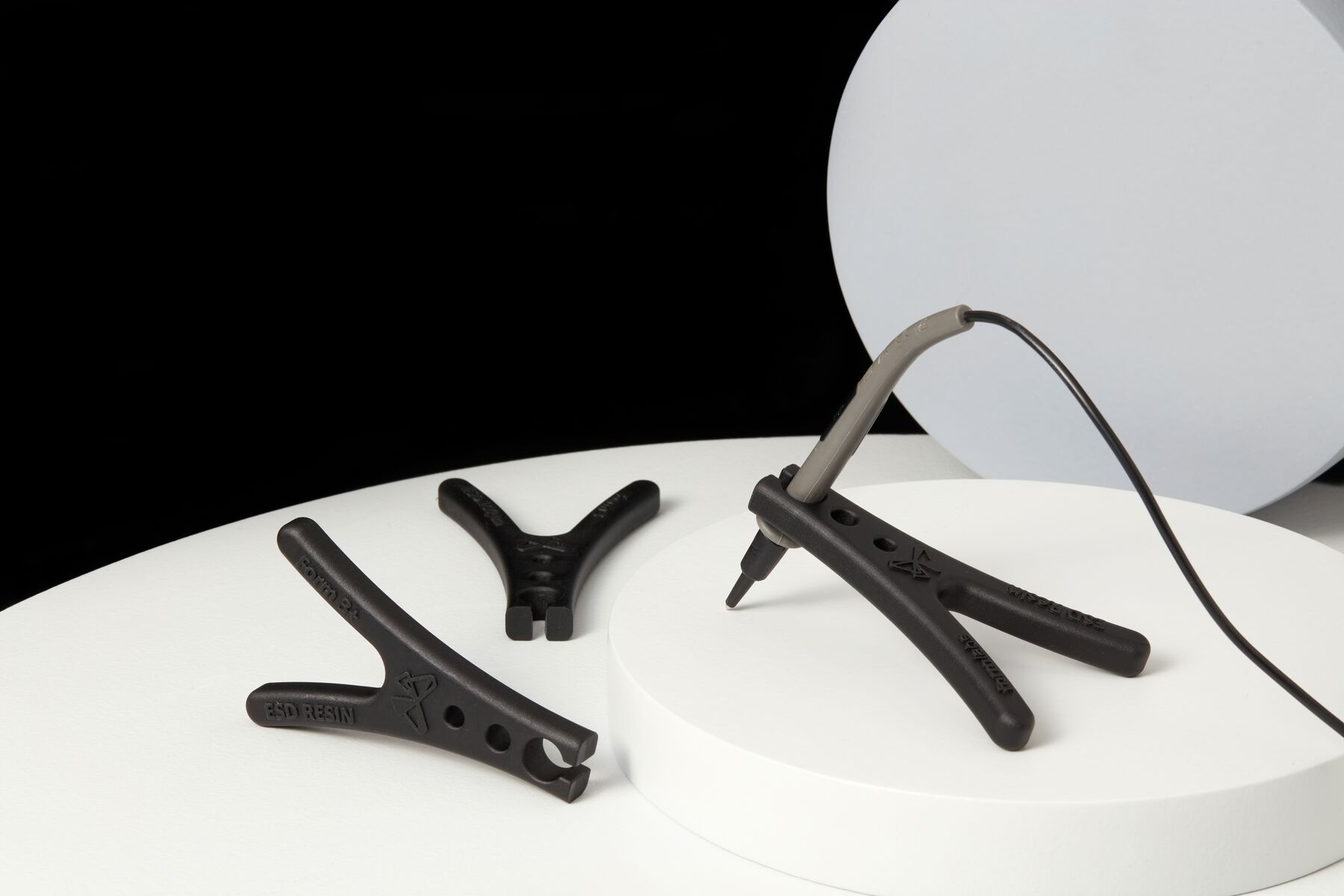
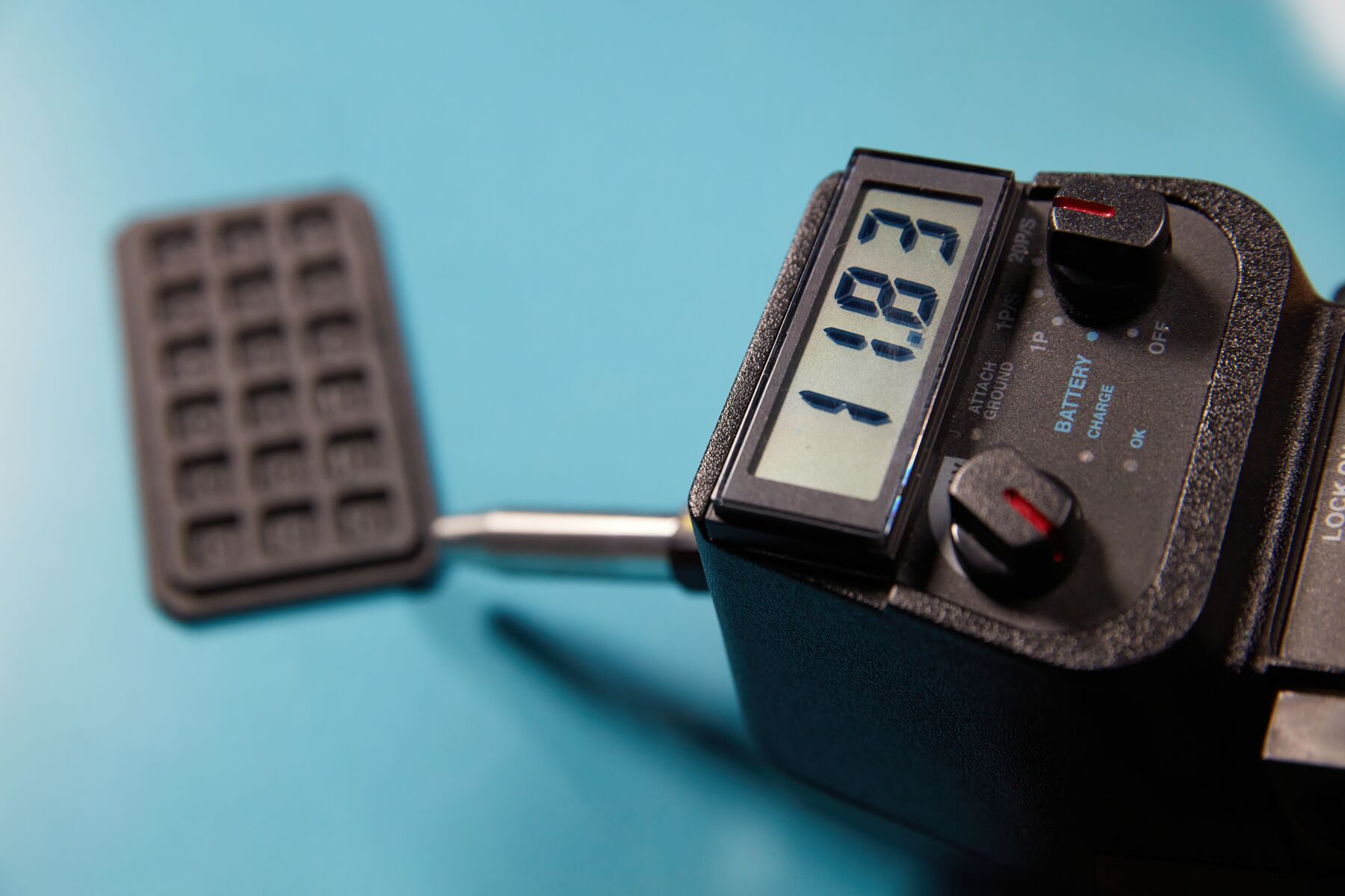
Real ESD Resin Parts
Actual Formlabs SLA prints in ESD Resin, not renders.
Summary & Key Takeaways
- Static Dissipative: Parts safely bleed off charge instead of holding it, protecting sensitive components during handling.
- ABS-Like Mechanicals: A 1.9 GPa tensile modulus and 26 J/m notched Izod impact strength stand up to production-line use.
- Repels Dust and Powder: The dissipative surface does not attract particulate the way an insulating plastic does.
- Tooling in Days, Not Weeks: Print ESD-safe nests, trays, and fixtures on demand instead of ordering machined ESD plastics.
Compare ESD Resin to Other 3D Printing Materials
A quick, scannable comparison against the alternatives usually considered for electronics tooling. All values are shown at once; use the buttons to focus on one comparison at a time.
Swipe to see all materials →
| Property | ESD Resin | Tough 2000 | Flame Retardant | Nylon 12 SLS |
|---|---|---|---|---|
| Tensile modulus | 1.9 GPa | 1.8 GPa | 3.1 GPa | 1.9 GPa |
| Flexural strength | 61 MPa | 67 MPa | 75 MPa | 66 MPa |
| Elongation at break | 12% | 79% | 7% | 11% |
| Notched Izod impact | 26 J/m | 25 J/m | 22 J/m | 32 J/m |
| Heat deflection temp (0.45 MPa) | 62 °C | 70 °C | 111 °C | 87 °C |
| Support structures | Removable supports for overhangs | Removable supports for overhangs | Removable supports for overhangs | None required |
Why Choose ESD Resin?
A specialty material for electronics manufacturing, where an insulating plastic fixture is a liability no matter how well it fits.
Protects Sensitive Components
Static-dissipative parts bleed charge away instead of accumulating it, so nests, trays, and enclosures can hold bare boards and components without risking a discharge event on the line.
Stiff Enough to Be Real Tooling
A 1.9 GPa tensile modulus, 61 MPa flexural strength, and 26 J/m notched Izod impact strength put it in ABS territory, so fixtures hold tolerance and survive repeated handling rather than flexing out of alignment.
Stays Clean on the Line
The dissipative matte black surface repels dust and powder that cling to insulating plastics, which keeps assembly fixtures and inspection nests usable for longer between cleaning cycles.
ESD Resin Design Rules (DFM) at a Glance
Formlabs SLA design guidelines for Form 3 and Form 4 generation printers. Check your CAD feature dimensions against these limits before uploading your file.
| Min. wall thickness (supported) | 1.0 mm |
|---|---|
| Min. wall thickness (unsupported) | 1.0 mm |
| Min. embossed detail | 0.1 mm |
| Min. engraved detail (width & depth) | 0.15 mm |
| Min. hole diameter | 0.5 mm |
| Min. drain hole diameter | 2.5 mm |
| Clearance between separate or moving parts | 0.5 mm min |
| Max. unsupported overhang | 5.0 mm · 10° min. angle from level |
| Dimensional tolerance (XY) |
±0.15% or ±0.02 mm, features up to 30 mm ±0.3% or ±0.06 mm, features 31 to 80 mm ±0.3% or ±0.15 mm, features 81 to 150 mm (whichever is larger) |
| Max. single-part build size | 353 × 196 × 350 mm |
Source: Formlabs SLA design specifications for Form 3 / Form 4 generation printers, adapted to hold walls to a higher minimum than Formlabs' published figures. ESD Resin's static-dissipative behavior is a bulk property of the printed material, so it applies through the wall rather than only at the surface; no conductive coating or secondary treatment is involved. These are general guidelines; cross-section, hole depth, and part geometry can shift the safe minimums for a specific design. Maximum build size reflects our largest-format SLA printer; actual build size depends on which machine your order routes to. Dimensional tolerance is Formlabs' published typical XY tolerance, taking the widest figure across the SLA printers we run for each feature-size band.
Frequently Asked Questions
Everything you need to know about designing, ordering, and using ESD Resin parts on Form Now.