Flexible 50A Resin
A soft, translucent SLA elastomer at 50A Shore durometer, for prototyping parts normally made from soft rubbers and silicones. Parts bend, stretch, and compress through repeated cycles without tearing, and spring back quickly.
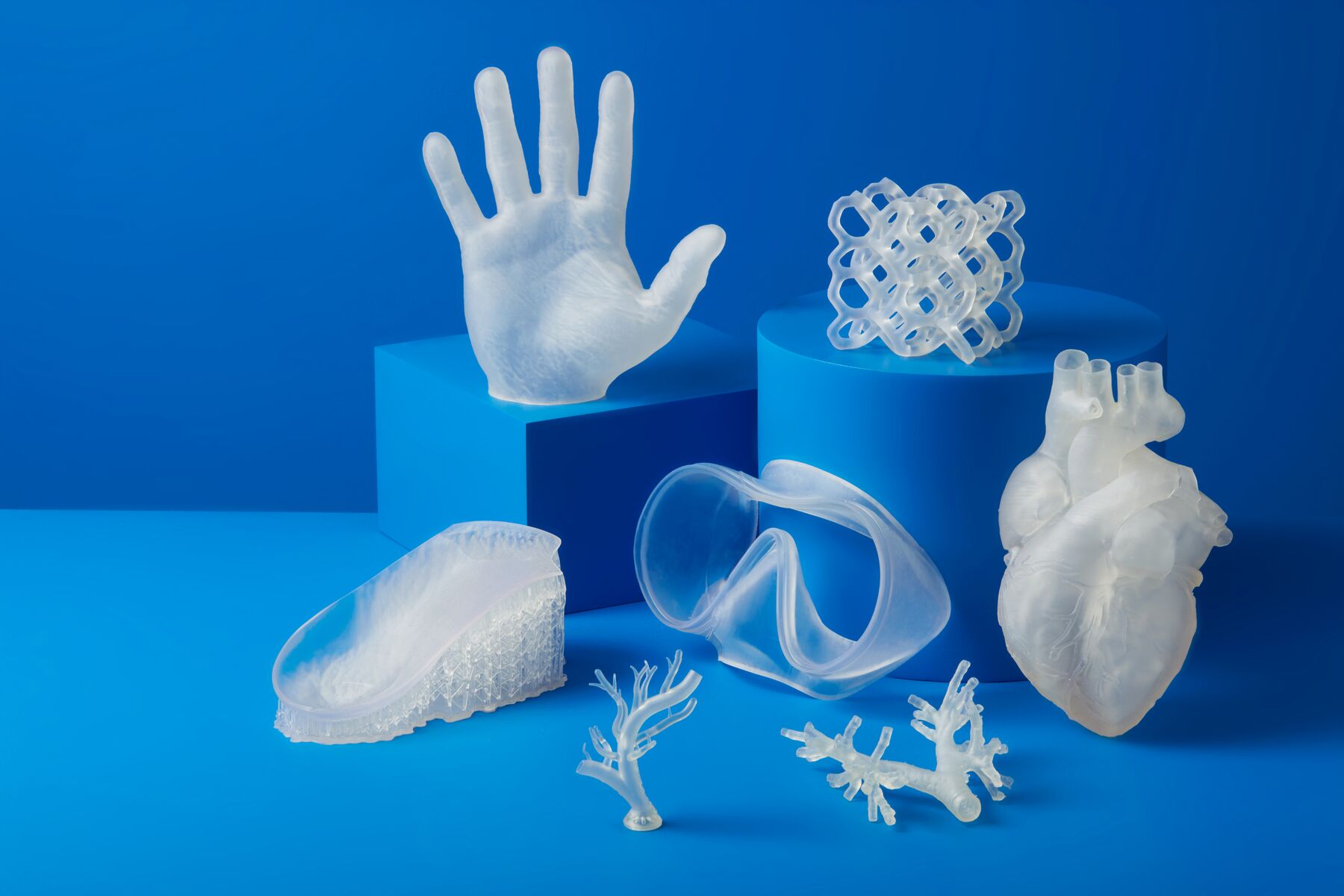
Real Flexible 50A Parts
Actual Formlabs SLA prints in Flexible 50A Resin, not renders.

Summary & Key Takeaways
- Genuinely Soft: 55A Shore hardness, the softest material we print, in the range of soft rubbers and silicones.
- Recovers Its Shape: A 3.1% compression set at 70 °C, so parts do not stay squashed after sustained compression.
- Translucent: Prints translucent, which suits soft tissue anatomy and medical models where internal features must show.
- Softness Costs Strength: 3.4 MPa tensile strength and 12.3 kN/m tear strength; choose Flexible 80A V2 when parts must resist tearing.
Compare Flexible 50A to Other 3D Printing Materials
A quick, scannable comparison against the other flexible materials we print. All values are shown at once; use the buttons to focus on one comparison at a time.
Swipe to see all materials →
| Property | Flexible 50A | Flexible 80A V2 | TPU 90A SLS |
|---|---|---|---|
| Shore hardness | 55A | 83A | 90A |
| Tensile strength | 3.4 MPa | 10 MPa | 8.7 MPa |
| Elongation at break | 160% | 230% | 310% |
| Tear strength | 12.3 kN/m | 28 kN/m | See TDS |
| Support structures | Removable supports for overhangs | Removable supports for overhangs | None required |
Why Choose Flexible 50A Resin?
The softest material we print, and the closest thing to a cast silicone that comes off a printer.
Silicone-Like Softness
At 55A Shore hardness, parts squeeze and conform the way soft rubber and silicone do, which makes it the right choice for wearables, soft-touch buttons, and anything that contacts the body.
Recovers After Compression
A 3.1% compression set at 70 °C means parts return close to their original thickness after being held compressed, so seals and pads used in prototypes keep working across repeated test cycles.
Translucent for Anatomical Models
The translucent finish lets internal channels and embedded features read through the wall, which is why it is a common choice for soft tissue anatomy and surgical rehearsal models.
Flexible 50A Design Rules (DFM) at a Glance
Formlabs SLA design guidelines for Form 3 and Form 4 generation printers, adjusted for elastomers. Check your CAD feature dimensions against these limits before uploading your file.
| Min. wall thickness (supported · unsupported) | 1.5 mm for both |
|---|---|
| Min. embossed detail | 0.2 mm |
| Min. engraved detail (width & depth) | 0.3 mm |
| Min. hole diameter | 1.0 mm |
| Min. drain hole diameter | 2.5 mm |
| Clearance between separate or moving parts | 0.5 mm min |
| Max. unsupported overhang | 5.0 mm · 10° min. angle from level |
| Dimensional tolerance (XY) | Looser than the ±0.15% to ±0.3% our rigid resins hold; soft parts deform under handling, so leave extra clearance on fits |
| Max. single-part build size | 353 × 196 × 350 mm |
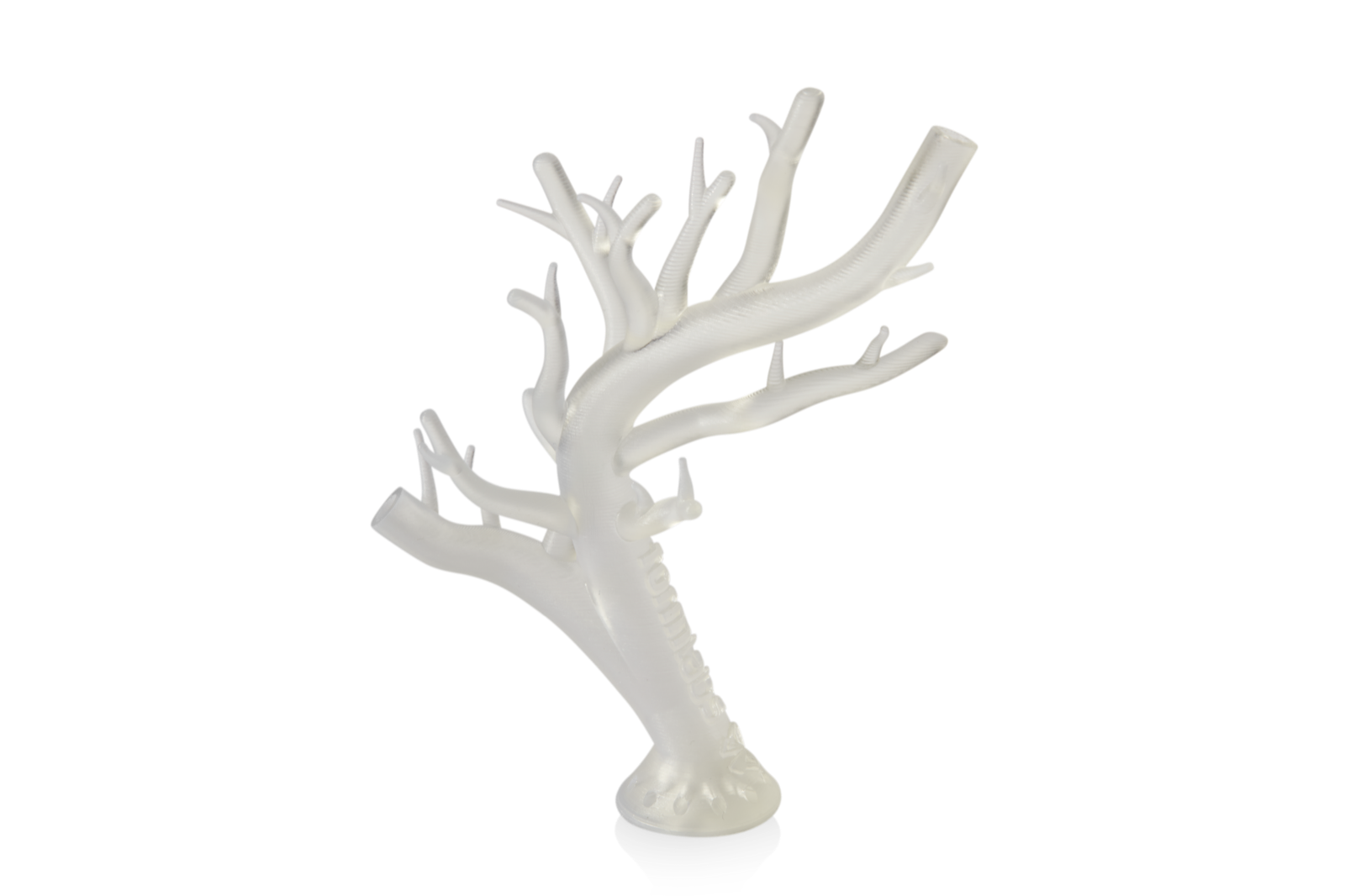
Source: Formlabs SLA design specifications for Form 3 / Form 4 generation printers, adapted to hold walls to a higher minimum than Formlabs' published figures. Flexible 50A is the softest material we print, so it is the least tolerant of thin features: walls below the minimum tear during support removal, and unsupported spans sag under their own weight. Back thin membranes with a thicker frame wherever the geometry allows. These are general guidelines; cross-section, hole depth, and part geometry can shift the safe minimums for a specific design. Maximum build size reflects our largest-format SLA printer; actual build size depends on which machine your order routes to. Formlabs publishes no dimensional tolerance for elastomeric resins; the rigid-resin figure quoted for comparison is the widest typical XY tolerance across the SLA printers we run.
Frequently Asked Questions
Everything you need to know about designing, ordering, and using Flexible 50A parts on Form Now.